
What it is
You contact each creditor, explain you can't afford the normal payments and offer a smaller amount based on your budget. There's no fee and no legal process. You stay in control and can change things as your situation changes.
How to set one up
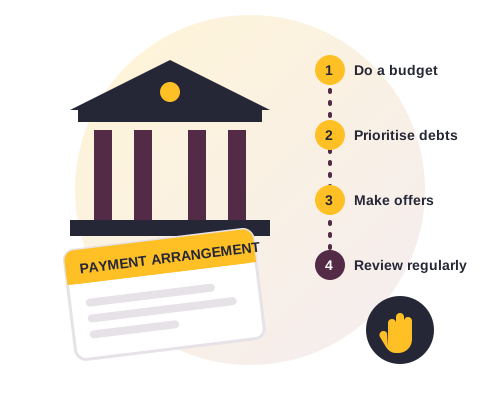
- Do a budget. List your income and essential spending.
- Deal with priority debts first, such as rent, council tax and energy.
- Share what's left fairly between your other creditors, in proportion to what you owe each one ("pro rata").
- Write to each creditor with your offer and budget. Ask them to freeze interest and charges.
- Start paying what you offered, even before they reply, and keep records.
- Review it every few months, or if your circumstances change.
Token payments
If you have nothing left after essentials, you can offer a token payment, often £1 a month per creditor, for a short time while your situation improves. Explain why, and say when you'll review it.
Pros and cons
| Pros | Cons |
|---|---|
| Free and quick to set up | Not legally binding |
| Flexible, and you stay in control | Creditors can still add interest or go to court |
| No formal record like an IVA or DRO | Missed payments and defaults can affect your credit file |
| Works for any number of creditors | You have to deal with each creditor yourself |
Arrangement or Debt Management Plan?
A Debt Management Plan is the same idea, but a provider contacts creditors and shares out your single monthly payment for you. If you'd rather not deal with creditors yourself, or the debts will take years to clear, a DMP or a formal solution such as an IVA may be better. Debt Breathing Space can give you 60 days to get advice first.
Not sure an arrangement is enough?
Tell us about your debts and a licensed insolvency practitioner will call you back to talk through your options. It's free, with no obligation.
Questions about informal arrangements
Do creditors have to accept an informal payment arrangement?
No, but most will accept a reasonable offer backed by a budget. Regulated lenders must treat customers in financial difficulty fairly.
Will an informal arrangement affect my credit rating?
It can. Creditors may record the arrangement or a default on your credit file, which usually stays for six years.
Can a creditor still take me to court?
Yes. Because it isn't legally binding, a creditor could still go to court, but it's less likely if you're paying what you offered.
What is a pro rata payment?
Sharing your spare money between creditors in proportion to how much you owe each one, so the biggest debts get the biggest share.
