
What is bankruptcy?
Bankruptcy is a legal process for people who can't pay their debts. Your assets may be used to pay your creditors, and in return most of your debts are written off, usually after one year.
You can apply to make yourself bankrupt online, without going to court. A creditor who is owed at least £5,000 can also apply to the court to make you bankrupt. Once a bankruptcy order is made, an official receiver from the Insolvency Service deals with your case.
Bankruptcy gives you a fresh start, but it has serious effects on your home, your belongings, some jobs and your credit file. Other options restrict you less, so get free debt advice before you apply.
Who is bankruptcy suitable for?
Bankruptcy may be worth considering if:
- you have no realistic way of paying your debts in a reasonable time
- you don't qualify for a Debt Relief Order, for example because you owe more than £50,000 or own your home
- you can't afford an IVA, or your creditors won't agree to one
- you have few assets, or you accept that assets such as your share of your home may be sold
There's no minimum debt to make yourself bankrupt. But if a pension or savings could pay your debts, the adjudicator may refuse your application. This page covers England and Wales. In Scotland, bankruptcy is called sequestration, and Northern Ireland has its own process.
How much does bankruptcy cost?
It costs £680: a £130 adjudicator fee and a £550 deposit. You pay it online. You can pay in instalments of at least £5, but the full fee must be paid before your application is sent. Someone else can pay for you, and some charities can help with the fee.
The fee isn't refunded once your application has been submitted.
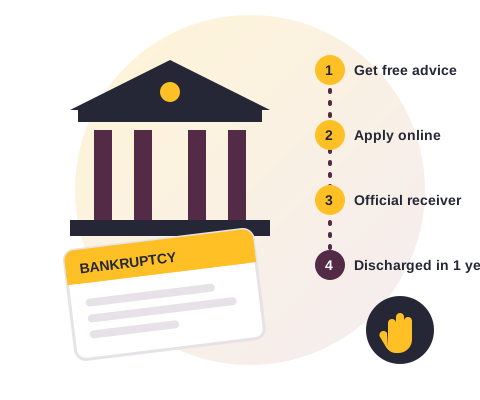
How to apply for bankruptcy
- Get free debt advice first. An adviser will check whether bankruptcy is right for you, or whether a DRO, IVA or another option would be better.
- Apply online on GOV.UK. You'll need details of your income, spending, debts and assets. Answer every question truthfully, as giving false information is a bankruptcy offence.
- Pay the £680 fee. In full or in instalments, before you submit.
- The adjudicator decides. An adjudicator at the Insolvency Service checks your application, usually within 28 days. There's no court hearing.
- The official receiver takes over. They'll contact you, usually for an interview, and deal with your creditors and assets.
- You're discharged. Usually after one year, most of your debts are written off.
At risk of violence? Your address is made public if you're made bankrupt. If that would put you at risk, apply for a "person at risk of violence" order before you submit your application.
Which debts are written off?
| Usually written off | Not written off |
|---|---|
| Credit cards, store cards and catalogues | Magistrates' court fines |
| Personal loans, overdrafts and payday loans | Student loans |
| Council tax arrears | Child maintenance arrears |
| Energy, water and phone arrears | Debts from fraud |
| HMRC tax debts | Personal injury compensation you've been ordered to pay |
| Business debts, if you're a sole trader | Social Fund loans |
Joint debts: the other person can still be chased for the full amount. Secured debts, like a mortgage, are dealt with differently, because the lender can still take the property.
Does bankruptcy stop bailiffs?
Yes, for the debts included. Once a bankruptcy order is made, creditors owed debts in your bankruptcy can't take action against you or your belongings without the court's permission. Bailiff action for debts like council tax arrears or a CCJ has to stop, and you should tell the bailiffs straight away.
- Court fines aren't written off, so bailiffs collecting magistrates' court fines can carry on. See our court fines guide.
- Before you're made bankrupt, bailiffs can still act. A debt adviser can apply for Breathing Space to give you 60 days' protection while you decide.
- Keep paying your current council tax and other bills. New arrears aren't covered.
For other ways to deal with bailiffs, see how to stop bailiffs.
What happens to my home?
- If you own your home, your share of the equity becomes part of your bankruptcy. The official receiver or trustee usually has 3 years to deal with it. If they don't, it passes back to you.
- If your share is worth less than £1,000, it usually passes straight back to you.
- If it's worth more, a partner, relative or friend may be able to buy your share. Otherwise, the home may be sold. Keep paying your mortgage.
- If you rent and you're up to date, you can usually stay. Old rent arrears are included in your bankruptcy, but your landlord could still seek eviction, and new arrears can be chased. Check your tenancy for a bankruptcy clause.
Your belongings, car, income and pension
- Belongings: basic household items, such as clothing, bedding, furniture and kitchen equipment, aren't taken. Valuable items, such as jewellery or a second car, may be sold.
- Your car: you can usually keep a car you need for work or essential family needs. A valuable car may be swapped for a cheaper one.
- Income: if you have more than about £20 a month spare after reasonable living costs, you may have to make payments for 3 years under an income payments agreement (IPA), even after you're discharged. You won't have to if your only income is benefits.
- Pensions: most approved pensions are protected. But pension income you're already drawing counts as income.
- Bank account: you'll usually need to close your account and open a basic bank account, which most high street banks offer.
Restrictions while you're bankrupt
Until you're discharged, it's a criminal offence to:
- borrow £500 or more without telling the lender you're bankrupt
- act as a company director, or set up, manage or promote a company, without the court's permission
- run a business under a different name without telling people the name you were made bankrupt in
- act as an insolvency practitioner
If the official receiver finds you acted dishonestly or recklessly, for example by gambling or taking credit you knew you couldn't repay, you may get a Bankruptcy Restrictions Order. This extends the restrictions for 2 to 15 years.
Jobs: check your employment contract. Some professions, such as solicitors and accountants, may be affected. If you're self-employed, your business may have to close, although you can usually start trading again.
Your credit file and public records
- Your bankruptcy is usually published in The Gazette, the official public record.
- It's listed on the Individual Insolvency Register until 3 months after you're discharged.
- Your name is added to the Land Charges register, which mortgage lenders search.
- It stays on your credit file for 6 years, and you may still have to mention it for some credit, such as a mortgage.
Advantages and disadvantages of bankruptcy
| Advantages | Disadvantages |
|---|---|
| Most debts are written off, usually after one year | It costs £680 |
| Creditors in the bankruptcy can't chase you, including bailiffs | Your share of your home and valuable assets may be sold |
| No minimum or maximum debt | You may have to pay from your income for 3 years |
| The official receiver deals with your creditors | It's made public and stays on your credit file for 6 years |
| A real fresh start if there's no other way out | Some jobs, and being a company director, are affected |
Bankruptcy compared with other options
| Bankruptcy | Debt Relief Order | IVA | |
|---|---|---|---|
| Cost | £680 | Free | Fees from your payments |
| How long? | Usually 1 year (payments up to 3) | 1 year | Usually 5 to 6 years |
| Debt limit | None | Under £50,000 | None |
| Your home | Your share may be sold | Must not own a home | Usually outside the IVA |
| Company director? | No, without permission | No | Yes |
Compare all your options on our debt advice page.
How Bailiff Helpline works: if you ask us to, we pass your details to a licensed insolvency practitioner from our panel, who may pay us a fee. They can talk you through all your options, including bankruptcy, which you apply for yourself through GOV.UK. Free, independent advice is also available from MoneyHelper, National Debtline and Citizens Advice.
Thinking about bankruptcy?
Tell us about your debts and a licensed insolvency practitioner will call you back to talk through your options. It's free, with no obligation.
Questions about bankruptcy
How much does it cost to go bankrupt?
£680, made up of a £130 adjudicator fee and a £550 deposit. You can pay online in instalments of at least £5, but the full fee must be paid before you submit your application.
How long does bankruptcy last?
You're usually discharged after one year, and most of your debts are written off. If you have spare income, you may have to keep making payments for up to 3 years under an income payments agreement.
Is there a minimum debt to go bankrupt?
No, there's no minimum if you apply yourself. A creditor needs to be owed at least £5,000 to make you bankrupt.
Will I lose my home if I go bankrupt?
If you own your home, your share of the equity can be sold, although a partner or relative may be able to buy it. If it isn't dealt with within 3 years, it passes back to you. If you rent and are up to date, you can usually stay.
Can I keep my car if I go bankrupt?
Usually, if you need it for work or essential family needs and it isn't worth a lot. A valuable car may be sold and replaced with a cheaper one.
Does bankruptcy stop bailiffs?
Yes, for debts included in the bankruptcy, such as council tax arrears or a CCJ. Once the bankruptcy order is made, those creditors can't take action without the court's permission. Court fines aren't covered.
Which debts aren't written off in bankruptcy?
Magistrates' court fines, student loans, child maintenance arrears, debts from fraud, personal injury compensation and Social Fund loans aren't written off.
Can I go bankrupt if I'm on benefits?
Yes. You won't be asked to make payments from your income if benefits are your only income. But if you qualify for a Debt Relief Order, that's free and may be a better option.
Will I lose my job if I go bankrupt?
Most people don't. Check your contract, as some jobs and professions, such as solicitors and accountants, have rules about bankruptcy. You can't be a company director without the court's permission.
Will bankruptcy affect my partner?
Your partner isn't made bankrupt. But they can still be chased for any joint debts, and if you own your home together, your share may be affected.
Is bankruptcy made public?
Yes. It's usually published in The Gazette and listed on the Individual Insolvency Register until 3 months after you're discharged. It stays on your credit file for 6 years.
What is an income payments agreement?
If you have more than about £20 a month spare after reasonable living costs, you may agree to pay some of it towards your debts for 3 years. If you don't agree, the official receiver can ask the court for an income payments order.
