
Who counts as vulnerable?
There's no fixed list, and anyone can find themselves in a vulnerable situation. Bailiffs must look out for signs of vulnerability and take them into account. You might be vulnerable if, for example:
- you have a serious or long-term illness, a disability or a mental health problem
- you're elderly, pregnant or caring for young children or someone who is ill
- you've recently been bereaved, lost your job or been through a relationship breakdown
- you're experiencing domestic or economic abuse
- you have difficulty reading, understanding English or dealing with paperwork
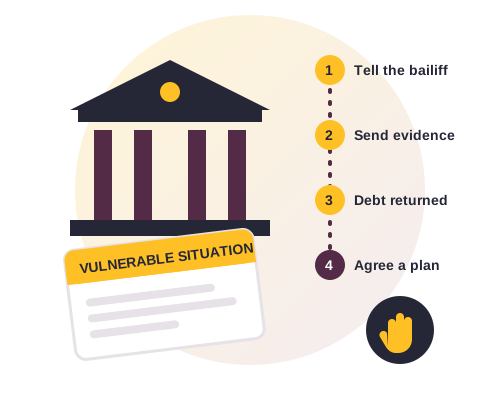
Being vulnerable doesn't mean the debt disappears. But it can mean the bailiff must pause, take extra care or refer the debt back to your creditor, and creditors such as councils often have policies to recall debts from bailiffs for vulnerable people.
Tips for using this letter
- Be specific. Explain how your circumstances affect you and why a visit would cause harm or distress.
- Send evidence if you can, such as a letter from your GP, consultant, social worker, mental health worker or support worker.
- Send a copy to your creditor, such as the council. They can recall the debt from the bailiffs.
- Keep copies of everything and note when you sent it.
- Ask for more time too. If you've just had a Notice of Enforcement, use our letter asking for 28 days.
What bailiffs must do
Bailiffs must follow the Taking Control of Goods National Standards and, for firms accredited by the Enforcement Conduct Board, the ECB's Standards for Agents. These say bailiffs should identify vulnerable people, give them extra time where needed and, in some cases, pass the debt back to the creditor.
Bailiffs also can't enter your home if the only people there are children under 16 (see can bailiffs force entry?). If a mental health crisis is affecting your ability to deal with your debts, a debt adviser can apply for Debt Breathing Space, which lasts for as long as your crisis treatment plus 30 days.
If a bailiff ignores your vulnerability, you can complain to the bailiff company.
Want help dealing with the debt?
Tell us about your debts and a licensed insolvency practitioner will call you back to talk through your options. It's free, with no obligation.
Questions about this letter
Do I have to prove I'm vulnerable?
Not always, but evidence makes your request much stronger. A letter from a doctor, social worker, mental health worker or support worker is ideal. If you can't get evidence quickly, send the letter anyway and say evidence will follow.
Will the debt be written off if I'm vulnerable?
Not usually. The debt still exists, but the bailiff may pause action or return it to your creditor so you can agree an affordable plan directly. Some councils can also reduce bills in cases of severe hardship.
What if the bailiff still visits?
Don't let them in, and tell them about your circumstances again. Then complain to the bailiff company and your creditor. If the firm is accredited by the Enforcement Conduct Board, you can take your complaint to the ECB if you're not happy with the firm's reply.
Can someone else send this letter for me?
Yes. A family member, friend, carer or debt adviser can help you or contact the bailiff on your behalf, as long as you agree.
